
Dental records in the Nordic countries
Key points
Comprehensive and accurate dental records are needed for forensic dental identification.
The duty and regulations for dental record keeping is stated by laws in all Nordic countries.
Access to dental records is regulated by strict laws and guidelines to ensure patient privacy and confidentiality.
In all Nordic countries, police can request access to dental records to aid in the identification of deceased persons.
Clinical relevance box
Proper dental record keeping is mandatory for all dental health clinicians. It is also crucial for the ability to perform forensic dental identification work, which is based on an objective comparison of the deceased's dental status (post mortem data) with collected dental information about a missing person (ante mortem data). The importance of standardized dental record-keeping and a common understanding across borders, especially within regions such as the Nordic countries, cannot be overstated.
Forensic dental identification relies on comparing the post mortem dental data of an unknown deceased individual with the ante mortem data of a missing person, necessitating comprehensive and accurate dental records. These records encompass written notes, images, casts, and digital scans. While written records can be subjective and prone to errors, particularly during periods with high workload, images like radiographs and photographs provide objective evidence crucial for identification. Effective identification benefits from a combination of written records and accessible images, casts, and scans.
In mass casualties with victims from many different countries, discrepancies in dental record-keeping due to language and regulatory differences pose challenges, underscoring the importance of standardized records and international collaboration. The Nordic countries maintain high standards in dental record-keeping, emphasizing the inclusion of patient identification details, diagnoses, treatment information, and dated entries for forensic purposes, and all records must be preserved for a specified period regulated by national laws. In the Nordic countries, police access to dental records for identification purposes is regulated vigorously to ensure confidentiality. Collaborative international efforts remain critical in streamlining forensic identification processes.
Forensic dental identification of an unknown individual is based on an objective comparison of the deceased's dental status (post mortem data) with collected dental information about a missing person (ante mortem data). Thus, the process is dependent on dentists providing good dental records. Dental records consist of written notes, images, casts and digital scans. Written dental records are subjective descriptions made by dental personnel and may contain errors. High workloads, time pressure, and situations where the clinician dictates information to an assistant for transcription can increase the risk of inaccuracies [1][2]. This makes relying solely on written records problematic for identification purposes, since these records interpret and describe findings rather than providing an objective capture [3]. Images, such as radiographs, clinical photographs and dental scans, offer on the other hand objective evidence and the possibility to distinguish unique patterns in both ante mortem and post mortem images. That makes them invaluable in corroborating identification [4]. Nevertheless, all teeth may not be visible on the images, and therefore a combination of written records and all accessible images, casts and scans provides the best reference material for identification work.
In mass casualty events involving victims from various countries, dental records can present challenges due to differences in language, traditions and regulations for patient record keeping, not to mention different tooth notation systems and dissimilar coding of dental procedures in various countries. The importance of standardized dental record-keeping and a common understanding across borders, especially within regions such as the Nordic countries, cannot be overstated. In situations involving mass casualties such as the tsunami disaster in Southeast Asia in 2004 [5] or the plane crash in Kebnekaise in 2012 [6], international collaboration became essential. INTERPOL's Disaster Victim Identification (DVI) guidelines incorporate standardized forms to systematically document ante mortem and post mortem data [7]. The guidelines are revised and improved every five years, based on experiences gained through international collaboration in DVI operations. Today, all Nordic countries, along with several other countries worldwide, follow these standards when performing identification work. Although the national forensic odontologists would normally transcribe the information from «their» patient records to the standardized INTERPOL ante mortem records, differences in how dental records are maintained or interpreted may impede the international collaboration in an identification process. Therefore, having a unified framework across boarders ensures streamlined collaboration, allowing dental professionals and forensic experts from different countries to work together effectively and efficiently.
Figur 1
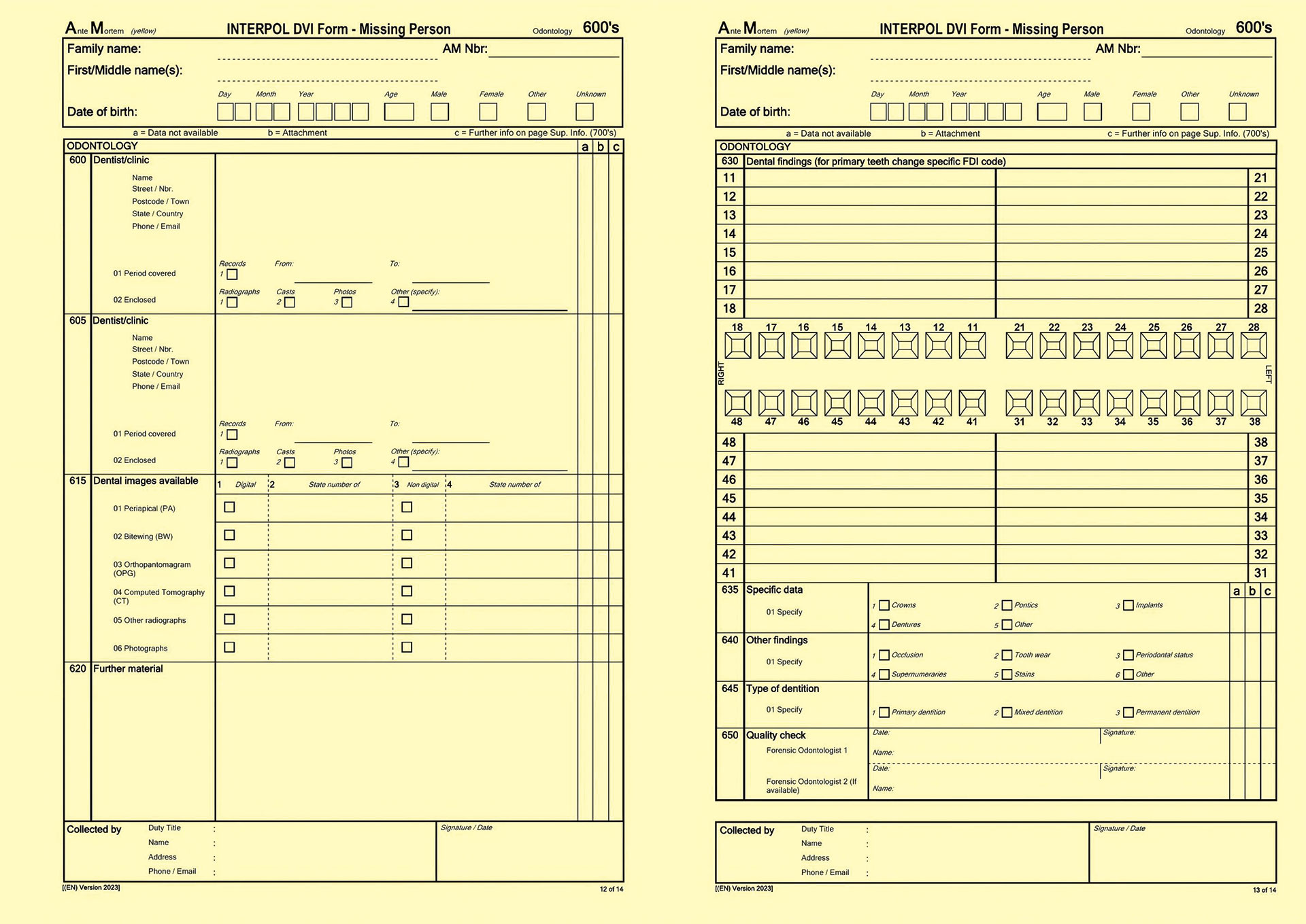
Figure 1. INTERPOL's standardized form for registering of dental ante mortem data.
General rules for dental record keeping and preservation in the Nordic countries
When performing dental identification of an unknown individual, the forensic odontologist requires sufficient ante mortem data. Therefore, accurate and thorough dental record-keeping is essential. Most dental records today are digital, but other forms remain equally important. It is vital to gather all available dental records regardless of their quality as every piece of information can be valuable in the identification process.
The duty and regulations for dental record keeping is stated in Bekendtgørelse om autoriserede sundhedspersoners patientjournaler [8] and Vejledning om journalføring på det tandfaglige område in Denmark [9], Patientdatalagen (SFS 2008:355) and Socialstyrelsens föreskrifter och allmänna råd om journalföring och behandling av personuppgifter i hälso- och sjukvården (HSLF-FS 2016:40) in Sweden [10][11], Laki sosiaali- ja terveydenhuollon asiakastietojen käsittelystä 703/2023 in Finland [12], Helsepersonelloven § 39 in Norway [13] and in Lög um sjúkraskrár 55/2009 in Iceland [14]. All these regulations state that health professionals with a license, such as dentists and dental hygienists, are required to maintain patient records containing necessary information for providing safe and effective care. Dental records play a crucial role in forensic identification of the deceased. All Nordic countries maintain high standard of dental record-keeping, which are similar in many aspects. From a forensic point of view, the following are the most important: The record should include the patient’s full name, date of birth, and, if necessary, a protected identity code. Records must be clear, with standardized abbreviations, and all entries should be dated on the day of treatment. Diagnoses should be documented before treatment, supported by radiographic images or photographs when needed. Treatment details, including materials used, must be recorded. If referrals are made, the specialist’s contact information should be included. Ideally the dental chart (odontogram) is filled out at the first visit and updated continuously. Each entry must be attributed to the clinician responsible.
Radiographs and photographs are considered parts of the records and should be maintained accordingly. Radiographs must be labelled with the patient's name and the date of examination, and written interpretations of the radiographs should also be included in the journal. While study- and working models are not required to be part of the journal in all countries, they can be important for assessing treatment outcomes and should be kept after treatment. Due to storage issues, it may be practical to photograph or scan the models. If replaced with photographs, the photographs of the model become a part of the journal.
In Denmark, Sweden and Norway, dental records should be kept for ten years after the last entry [8][9][10][13]. In Finland, dental records must be kept for 12 years after death or 120 years after birth [12]. In Iceland, it is prohibited to dispose of dental records unless authorized under Article 24 of the Public Archives Act No.77/201 [15]. If dental records can no longer be stored with the dentist, they must be submitted to the National Archives of Iceland in a specific format to ensure that the records can be retrieved if requested [14][15].
Figur 2
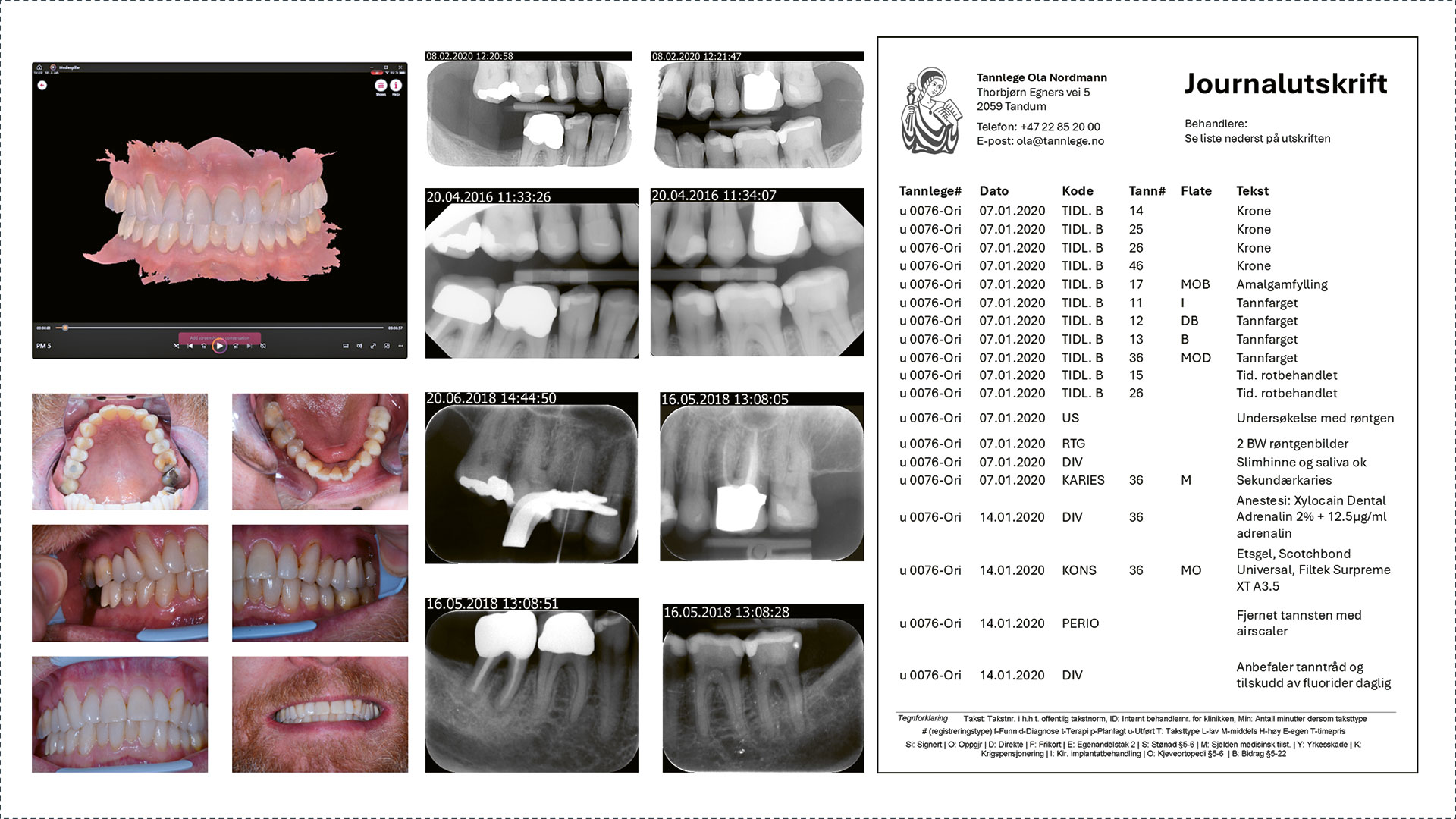
Figure 2. A digital patient record, consisting of written records, radiographs, clinical photographs and a digital scan of the jaws (courtesy of Ina C. Knivsberg, Norway).
Tooth notation systems
Different ways of notating tooth numbers may be subject for confusion when collecting ante mortem-data on victims from various countries, during for instance mass casualties. Figure 3 shows four tooth notation systems that is still commonly used internationally today. Unfortunately, efforts to try to standardize the way dentists annotate teeth has failed. The FDI (World Dental Federation)-system has been suggested by ISO as a standardized system that should be used worldwide [16] and is recommended by Interpol for DVI-work [7]. The FDI-system is used in most Nordic countries today. Nevertheless, in Denmark, the Victor Haderup system is still commonly used, while dentists in the US insists on using their Universal system and the Palmer system is still widely used in the UK. Other tooth numbering systems may also be found in old dental records, and notation systems may sometimes be customized by region, institution, or practitioner. When interpreting old dental records, dentists are advised to always look for a legend or dental chart if available in the dental record. If unsure, cross-reference with tooth diagrams such as the one presented in figure 3.
Figur 3
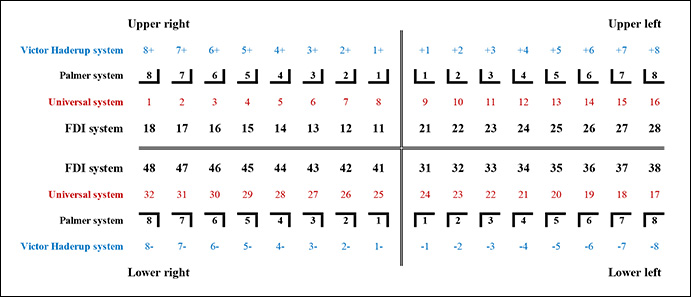
Figure 3. Four different tooth notation systems that are still in use among dentists internationally.
How can the police access dental records for use in identification of missing persons?
Access to dental records is regulated by strict laws and guidelines to ensure patient privacy and confidentiality. In all Nordic countries, police can request access to dental records to aid in the identification of missing persons [8][9][13][14][17][18][19]. The process involves contacting relatives to obtain information about the missing person’s dentist to access the records.
In Sweden, a government-funded dental subsidy system allows tracking of which dental clinics have provided dental care for a patient, as citizens over 20 years receive subsidies, while younger individuals receive free dental care [20][21]. The Swedish Social Insurance Agency (Försäkringskassan) is responsible for paying the subsidy for adults and therefore maintains records of dental visits, which the police can request information from when an identity is assumed [21]. In Denmark, when a patient has been treated at a dental clinic, the dentist's provider number and the patient's social security number will be connected. The police can therefore, by contacting the health authorities, locate the missing person's dentist. If the missing person is under the age of 21, the police can request the dental record through the public dental care. In Iceland, access to dental records whether through the national health insurance database or directly from dental practitioners requires consent from a relative according to article 15 in Lög um sjúkraskrár [14]. The Health Insurance of Iceland (Sjúkratryggingar Íslands) [22] maintains a database of dental treatment records as they cover part of the dental expenses for specific groups, including children under 18 years old, disabled individuals, and pensioners over the age of 67. For individuals outside these categories, the only available approach for the police is to contact the missing person’s relatives to determine whether they have information about the individual’s dentist. Old dental records are held by the National Archives of Iceland for preservation [15]. In Finland, dental care is provided by public and private sectors, and the availability of the dental records needs to be acquired from both. Finland is divided into 21 wellbeing services counties, which offer dental records from the public sector. Dental care in private practices is partially compensated by the Social insurance institution of Finland (KELA), which is thus able to point out which dental clinic in the private sector the missing person has attended. Through the record offices of both of these sectors the police request dental records. The National Healthcare Information System Services (Kanta-services) withholds a national patient information archive, however, neither the police nor forensic odontologists can access the Kanta-services after an individual is deceased [12]. In Norway, there is no national patient record or -register neither in the Public Dental Service (PDS), nor in private practices, so the police must conduct their own investigation to sort out who was the dentist of the missing person. Dental care in Norway is provided by the Public Dental Service in 15 counties to children, adolescents, young adults and certain groups, such as nursing home residents. If the police know which county the missing person lived in, they may contact the PDS in that county. Adults generally pay for their own treatment in private practices in Norway, but some specific clinical procedures may be partly compensated by The Norwegian Health Economics Administration (Helfo). Thus, the police may contact this department to get information about the dentist’s treatment, but in most cases tactical police work is necessary, such as asking relatives and friends, or locating bills from the dentist at the missing person’s home.
In all the Nordic countries, the request for ante mortem dental records comes from the police. Occasionally, the police find it difficult to locate these records. Identifying the public or private clinic, or the dentist who performed the treatment, can be time-consuming, especially in countries without a national register detailing which dental clinics have provided dental care to a patient. Another issue arises from the fact that when requesting dental records, the police have neither possibility nor qualification to evaluate if the record is complete. Therefore, as a conclusion to this paper, we include a list of the components of a dental record that forensic odontologists would like the police to be provided with when they request records of a missing person:
The dentist's name and contact information
The name and personal identification number of the missing person
All written dental records (from the first visit to the most recent visit to the dental clinic)
All dental radiographs (either digital radiographs or original analogue radiographs). Note: Printouts of the radiographs usually have too low quality
An odontogram (e.g., a screenshot from the digital patient record, if applicable)
All clinical photographs
Referrals of other health care providers
All models, analogues or digital scans
Relevant documents from the dental technician
Any other information that could be valuable in the identification process
It is important to emphasize that forensic odontologists will not judge dentists based on their dental records and have neither desire nor obligation to report potential malpractice to the authorities. Our mandate is to conduct secure identification work, and to do that, we need adequate dental records.
Summary and conclusion
The process of forensic dental identification relies significantly on the quality and accuracy of dental records, underscoring the need for standardized record-keeping practices across borders. The Nordic countries uphold high standards in dental record management and enforce similar government regulations for record keeping, providing a model for effective collaboration and regulatory alignment, which ensures streamlined forensic processes. The protection of patient privacy, along with efficient record access protocols, facilitates effective forensic investigations and highlights the importance of an integrated approach to dental identification practices.
References
Alotaibi S, Deligianni E, Riley P, Glenny AM. Prevalence and Incidence of Stress Among UK Dental Students: A Systematic Review and Meta-analysis. Int Dent J. 2024;75(3):2314–2322.
Plessas A, Nasser M, Hanoch Y, O'Brien T, Bernardes Delgado M, Moles D. Impact of time pressure on dentists' diagnostic performance. J Dent. 2019;82:38–44.
Forrest A. Forensic odontology in DVI: current practice and recent advances. Forensic Sci Res. 2019;4(4):316–30.
Storer CA BJ, Higgins D. Dental identification practices across Australia. Australian Journal of Forensic Sciences. 2021;54(5):622–35.
Schuller-Gotzburg P, Suchanek J. Forensic odontologists successfully identify tsunami victims in Phuket, Thailand. Forensic Sci Int. 2007;171(2-3):204–7.
Swedish Acident Investigation Authority (Statens haverikommission). Sluttrapport RM 2013:02. 2013. Sweden. https://shk.se/download/18.2d6f089b18faca29dc81a445/1698926651182/RM-2013_02_no.pdf
INTERPOL. Disaster Victim Identification Guide. 2023. https://www.interpol.int/content/download/589/file/DVI_DVI%20Guide%202023.pdf
Styrelsen for Patientsikkerhed. Bekendtgørelse om autoriserede sundhedspersoners patientjournaler (journalføring, opbevaring, videregivelse, overdragelse m.v.). Lovtidende A2024. Denmark. https://www.retsinformation.dk/eli/lta/2024/713/pdf
Indenrigs og Sundhedsministeriet. Vejledning om journalføring på det tandfaglige område. 2024. Denmark. https://www.retsinformation.dk/api/pdf/224424
Socialdepartementet. Patientdatalag (2008:355). 2008. Sweden. https://www.riksdagen.se/sv/dokument-och-lagar/dokument/svensk-forfattningssamling/patientdatalag-2008355_sfs-2008-355/
Socialstyrelsen. Socialstyrelsens föreskrifter och allmänna råd om journalföring och behandling av personuppgifter i hälso- och sjukvården (HSLF-FS 2016:40). 2016. Sweden. https://www.socialstyrelsen.se/kunskapsstod-och-regler/regler-och-riktlinjer/foreskrifter-och-allmanna-rad/konsoliderade-foreskrifter/201640-om-journalforing-och-behandling-av-personuppgifter-i-halso--och-sjukvarden/
Suomen säädöskokoelma. Laki sosiaali- ja terveydenhuollon asiakastietojen käsittelystä 703/2023. 2023. Finland. https://www.finlex.fi/fi/lainsaadanto/saadoskokoelma/2023/703
Helsepersonelloven. 2024. Lov om helsepersonell m.v. av 1999-07-02 nr. 64. Norway. https://lovdata.no/dokument/NL/lov/1999-07-02-64?q=helsepersonelloven
Alþingi. Lög um sjúkraskrár. 2009. Iceland. https://www.althingi.is/lagas/nuna/2009055.html
Alþingi. Lög um opinber skjalasöfn (Public Archives Act No.77/2014). 2014. Iceland. https://www.althingi.is/lagas/nuna/2014077.html
International Organization for Standardization (ISO). ISO 3950:2016 Dentistry — Designation system for teeth and areas of the oral cavity. 2016. https://www.iso.org/obp/ui/en/#iso:std:iso:3950:ed-4:v1:en
Sisäministeriö. Poliisilaki (872/2011). 2011. Finland. https://www.finlex.fi/en/legislation/2011/872
Indenrigs- og Sundhedsministeriet. Bekendtgørelse af sundhedsloven. 2024. Denmark. https://www.retsinformation.dk/eli/lta/2025/275
Socialdepartementet. Patientsäkerhetslag (2010:659). 2010. Sweden. https://www.riksdagen.se/sv/dokument-och-lagar/dokument/svensk-forfattningssamling/patientsakerhetslag-2010659_sfs-2010-659/
Socialdepartementet. Tandvårdslag (1985:125) 7 § 1 and 15 a §. 1985. Sweden. https://www.riksdagen.se/sv/dokument-och-lagar/dokument/svensk-forfattningssamling/tandvardslag-1985125_sfs-1985-125/
Socialdepartementet. Lag (2008:145) om statligt tandvårdsstöd. 2008. Sweden. https://www.riksdagen.se/sv/dokument-och-lagar/dokument/svensk-forfattningssamling/lag-2008145-om-statligt-tandvardsstod_sfs-2008-145/
Alþingi. Lög um sjúkratryggingar. 2008. Iceland. https://www.althingi.is//lagas/nuna/2008112.html
Corresponding author: Simen E. Kopperud. E-mail: simen.kopperud@odont.uio.no
Accepted for publication 21.5.2025, The article is peer reviewed.
The article is cited as: Kopperud SE, Jónsdóttir SR, Hurnanen J, Teilum A, Gahn R. Dental records in the Nordic countries. Nor Tannlegeforen Tid. 2026;. doi:10.56373/6973520498f06
Keywords: forensic dentistry, dental records, human identification
Akseptert for publisering 21.05.2025. Artikkelen er fagfellevurdert.
Artikkelen siteres som:
Kopperud SE.Jónsdóttir SR.Hurnanen J.Teilum A.Gahn R. Dental records in the Nordic countries. Nor Tannlegeforen Tid. doi:10.56373/6973520498f06