
The role of forensic odontology in mass disaster victim identification
Mass disasters, whether natural, man-made, or a combination, often result in numerous fatalities and present complex challenges in victim identification. Disaster Victim Identification (DVI) is a structured, multidisciplinary process that aims to recover, identify, and repatriate deceased individuals. Globally accepted standards, such as the INTERPOL DVI guidelines, form the foundation of modern DVI operations and are actively applied across the Nordic countries. Key identification methods include dental records, DNA analysis, and fingerprint comparison, with dental identification playing a vital role, especially when remains are fragmented or degraded. Effective DVI requires collaboration between police, forensic experts, and healthcare professionals. This paper outlines the organisation, protocols, and identification techniques used in mass fatality incidents, with a focus on the Nordic context. It also addresses current challenges, such as lack of ante-mortem data, DNA contamination, technological limitations, and emphasizes the importance of preparedness, training, and high-quality dental record keeping. As future mass disasters are inevitable, the dental profession must remain ready to contribute to DVI efforts by ensuring accurate and accessible documentation and engaging in forensic odontology networks.
Clinical relevance
Dental professionals may be called upon to support DVI efforts following mass disasters, both nationally and internationally.
Accurate dental records, including high-quality charting and radiographs, are essential critical for successful identification.
Dental records should be retained either for at least 10 years after a patient’s last visit (e.g., Sweden, Denmark and Norway) or 12 years from death or 120 years from birth (Finland). In Iceland it is mandatory to keep all your records as long as you are practing dentristy. After retirement, the dentist is to turn the records in to The Directorate of Health in Iceland.
Pre-disaster preparedness, including familiarity with DVI procedures and INTERPOL guidelines, enhances the profession’s ability to respond effectively.
Forensic odontology offers an important opportunity for dentists to contribute to society in times of crisis.
Throughout human history, the world has repeatedly experienced mass disasters [1]. In modern times, large-scale incidents such as the 9/11 terrorist attacks in 2001, the Bali bombings in 2003, the Asian tsunami in 2004 have occurred. Additionally, smaller-scale incidents, including migrant boat disasters, fires, and terrorist attacks, continue to take place [2]. Due to globalization, climate change, and advancements in transportation technology, the frequency and impact of disasters have increased significantly [3].
According to the United Nations Office for Disaster Risk Reduction (UNDRR), a disaster is defined as a serious disruption in the functioning of a community or society at any scale, caused by hazardous events interacting with conditions of exposure, vulnerability, and capacity. This disruption leads to one or more of the following: human, material, economic, and environmental losses and impacts [4]. The terms Mass Disaster Incident (MDI) and Mass Fatality Incident (MFI) are used interchangeably to describe any incident in which the number of fatalities exceeds the capacity of local resources and authorities to manage [5].
Larger-scale disasters may involve tens or even hundreds of thousands of victims in a single event and require support from national or even international services. Small-scale disasters, on the other hand, typically involve a number of fatalities that surpass the local community's capacity to respond [4]. To further define different types of disasters, various classifications have been proposed, one common of which distinguishes between «natural» and «man-made» disasters [6]. Of course, a major disaster can also be a combination of events – for example, a plane crash caused by a terrorist attack. Furthermore, a mass disaster can be «closed» which occurs when there is prior knowledge about the individuals involved, often based on information retrieved from passenger lists or other reliable sources. In contrast, an «open» disaster is characterized by limited information about the victims, as seen in natural disasters. A «mixed» disaster combines elements of both closed and open disasters, such as a plane crash into a shopping mall, where some victims are known (e.g., passengers) while others remain unidentified (e.g., bystanders) [1]. Regardless of the cause, each disaster presents unique challenges in the recovery, identification, and repatriation of victims [1]. While disasters vary in scale, environment, and operational circumstances, they often result in unidentified victims, creating significant challenges for forensic professionals and investigative teams [7]. The identification of human remains is a crucial forensic process, not only as a fundamental human right but also for judicial, ethical, civil, and criminal investigative purposes [3].
The concept of Disaster Victim Identification (DVI)
The outcome of a mass fatality incident (MFI) response requiring the identification of numerous victims, depends heavily on structured and efficient organization throughout the entire recovery process. Due to the complexity of such operations, they require the coordinated efforts of multidisciplinary, well-trained teams. In response to these needs, several international guidelines for post-disaster operations have been developed.
INTERPOL published its first Disaster Victim Identification (DVI) guidelines in 1984. These are maintained and continuously improved by an international DVI Working Group composed of forensic and law enforcement experts who meet annually to share experiences and refining procedures [1]. The primary aim of the INTERPOL DVI Guide is to establish baseline standards for conducting DVI operations globally. It also includes standardized forms for structured documentation of ante mortem (AM) and post mortem (PM) data to support accurate and consistent victim identification [8][9].
Following the 2004–2005 Southeast Asia tsunami (figure 1a-b), the guidelines were significantly expanded based on lessons learned during one of the largest international DVI operations to date. The most recent version was published in 2023. Widely accepted by INTERPOL’s 196 member states, the guidelines have been applied in numerous international DVI efforts [3]. The Nordic countries fully adhere to these standards and actively contribute to the INTERPOL DVI Working Group. In military contexts, DVI operations follow specific standards. For instance, NATO has issued a guideline on forensic dental identification, which aligns closely with the INTERPOL framework. Additionally, due to the ongoing challenge of identifying deceased migrants, new protocols have been developed for comparing post-mortem and ante-mortem facial images [10].
Figur 1
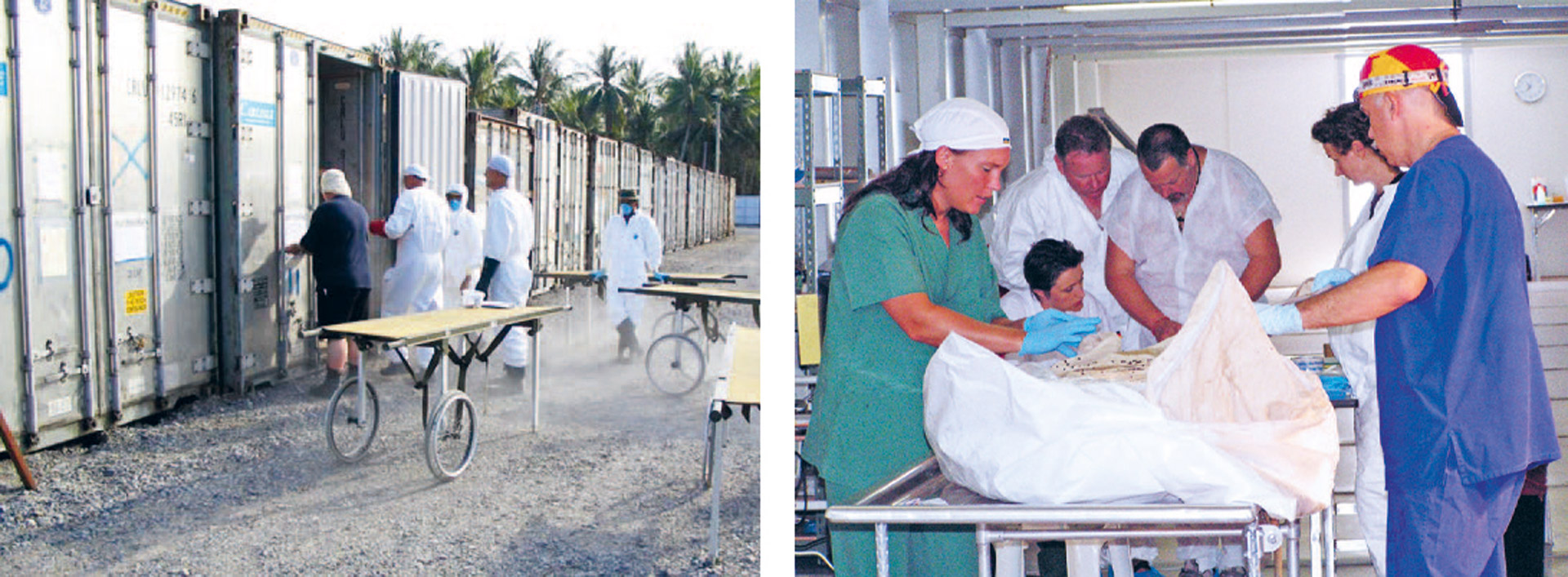
Figure 1a-b. During the DVI operation in Thailand in 2005, a large number of forensic odontologists from various countries, including the Nordic nations, participated. On the left, containers used for temporary storage of the deceased awaiting examination. On the right, a forensic odontologist works alongside a forensic pathologist and crime scene technicians in the examination of a deceased individual.
Identification methods in mass disasters
In mass disasters victim identification methods are chosen on the basis of the degree of damage and condition of human remains. The victims may be identified by so called identifiers, and we distinguish between primary and secondary identifiers. There are only three internationally accepted primary identifiers; comparative dental analysis, friction ridge analysis (fingerprints, palm prints or footprints) and DNA analysis. A positive conclusion from either of these three can independently establish identity, but in mass disasters two or more primary identifiers are preferred to reduce the risk of bias. Unique serial numbers from medical implants, such as hip joint implants, may also be used as reliable identifiers. To date no such serial number exists in dental implants, however some implant producers mark their implants with batch numbers. Secondary identifiers can support a conclusion based on primary identifiers, but are not strong enough to be used to establish identity independently. These include medical information and history, such as evidence of disease, fractures or surgical procedures, scars, heart pacemakers and prosthetic or other medical devices. Tattoos, piercings and moles may also be used as secondary identifiers in case AM data is available for comparison. Secondary identifiers can also be police technical and tactical information, such as all effects found on the remains of victims e.g. jewellery, clothing and personal identity documents, and observations on the crime scene. Visual identification by a witness or relatives causes extensive psychological stress in confrontation with the deceased and is not considered a reliable identification method [9].
The organisation of DVI in the Nordic countries
The Nordic countries all apply to the INTERPOL DVI guidelines as member countries. Representatives of the DVI-teams in the Nordic countries actively participate in the INTERPOL DVI working group and the continuous update of the INTERPOL DVI guidelines. For decades the Nordic DVI-teams have a tradition of regular DVI conferences circulating between the Nordic countries. These meetings comprise mutual exercises and exchange of experience between the Nordic colleagues of the DVI disciplines (police, pathologists, forensic odontologists, geneticists, anthropologists. Regular Nordic meetings strengthen the collaboration between the Nordic DVI-teams. Nordic DVI-teams have collaborated successfully in relation to several international and Nordic DVI-actions e.g. Scandinavian Star (1990) and Thai Tsunami (2004–2005), to mention a few. For decades Nordic forensic odontology experts successfully collaborated on providing an international intensive training course on forensic dental disaster victim identification. Forensic odontologists also regularly participate in joint exercises with the Nordic countries (figure 2).
Figur 2
100,v,n,
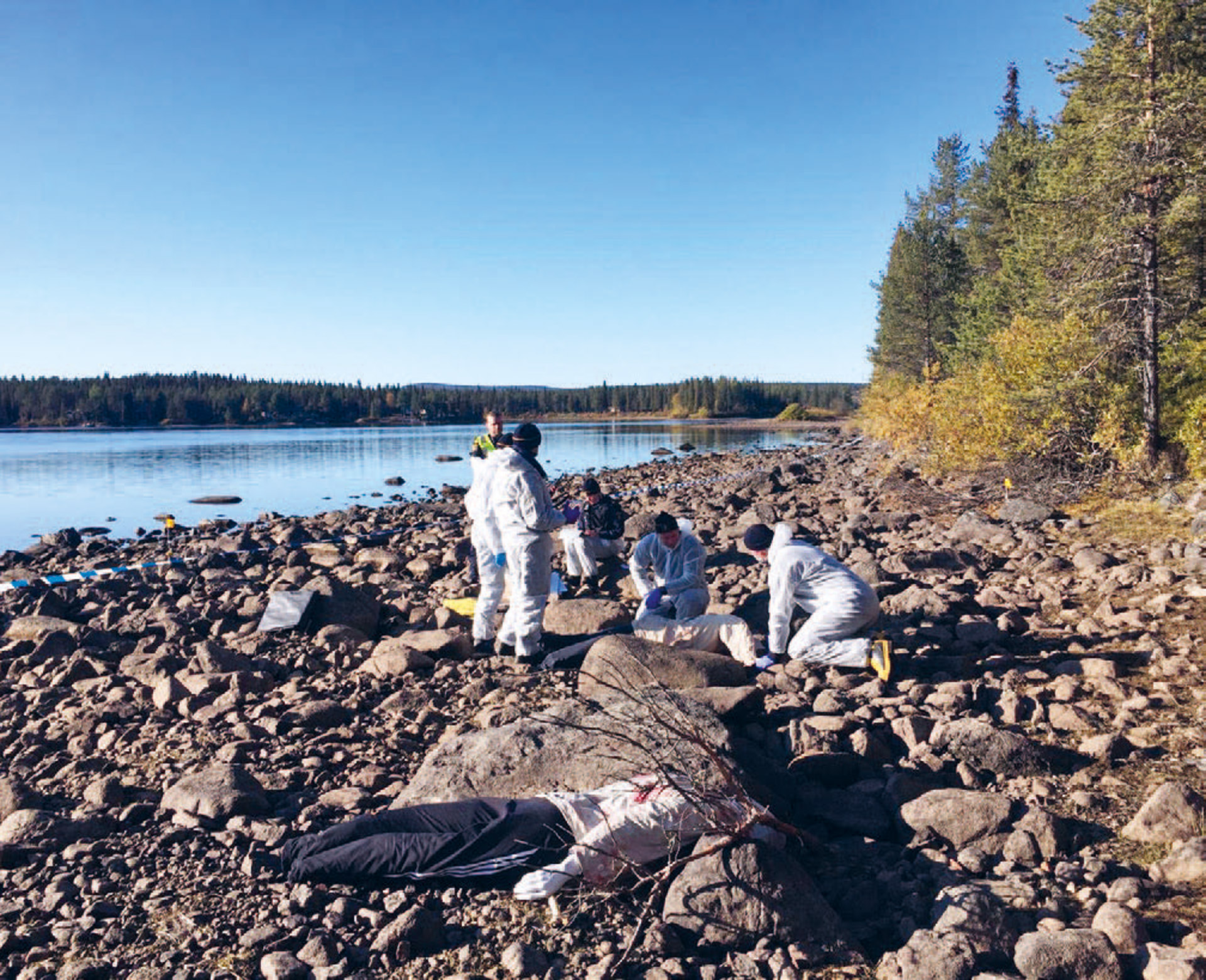
Figure 2. Forensic odontologists working side by side with crime scene technicians in the management of the deceased. Photo taken during the Nordic exercise Barents Rescue 2019.
DVI: A structured approach from scene recovery to repatriation
The DVI framework is composed of four structured phases. Proper execution of these phases ensures scientific accuracy, legal validity, and respectful handling of the deceased, culminating in repatriation and support for bereaved families.
Scene recovery
Immediate Response Teams (IRTs) are deployed at a very early stage to conduct a rapid reconnaissance of the disaster area. Their task is to gain an initial overview of the scope and nature of the incident, assess logistical needs, and inform the planning of the full DVI operation. This early assessment is critical to ensure that subsequent recovery efforts are carried out efficiently and in accordance with forensic standards.
Once the site has been assessed and secured, the systematic recovery of human remains and associated evidence begins. This phase is primarily carried out by crime scene investigators (CSIs) with specialized training in DVI procedures. They operate under strict chain-of-custody protocols to preserve evidentiary integrity and prevent contamination [8][11]. Each set of remains is meticulously documented in situ, with attention to contextual factors such as clothing, personal effects, and body positioning, elements that may serve as vital identifiers. In cases where the disaster site is also classified as a crime scene, traditional crime scene investigators and DVI-trained forensic technicians must work side by side [11].
Post mortem Data Collection
Once remains are transported to designated mortuary facilities, detailed post mortem (PM) examinations are conducted (figure 3). Forensic pathologists, crime scene investigators, forensic anthropologists, and forensic odontologists collaborate to obtain primary identifiers such as dental information, fingerprints, and DNA samples. Secondary identifiers, such as scars, tattoos, surgical implants, or personal items, are also recorded. In complex cases involving decomposition, fragmentation, or trauma, digital imaging tools including CT scans, 3D reconstruction, and virtual autopsy techniques are employed to enhance documentation and analysis [12]. Post mortem data is collected using Interpol’s standardized pink forms, ensuring consistent documentation across cases.
Figur 3
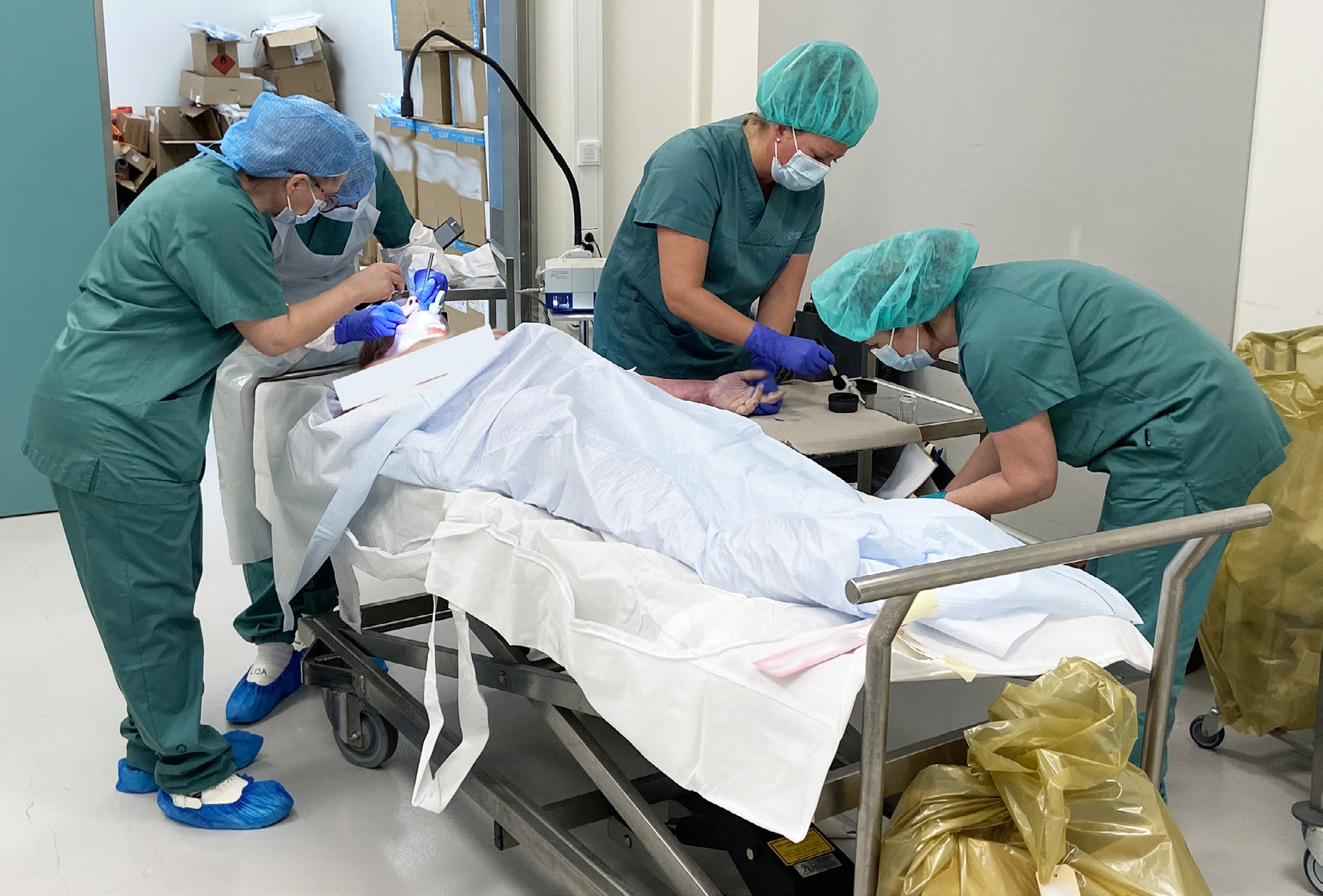
Figure 3. Post mortem registration in the morgue following a mass fatality incident. Two forensic odontologists examine the oral cavity while two fingerprint experts perform fingerprinting simultaneously.
Ante mortem Data Collection
Ante mortem (AM) data is obtained from families, healthcare providers, and official registries. This includes dental records, medical files, photographs, fingerprints, and biological reference samples from relatives. In settings where documentation is limited, international cooperation and data-sharing platforms are vital for retrieving relevant information [8]. All AM data is digitized and formatted to align with PM records, preparing both datasets for the reconciliation phase.
Reconciliation
The reconciliation phase is the core of the identification process. Here, multidisciplinary teams compare AM and PM data to determine matches. Positive identification is established through concordance between primary identifiers, such as dental or DNA matches, and may be supported by secondary indicators and contextual evidence [13]. Each case is reviewed to ensure accuracy, and formal identification reports are issued.
Importantly, it is the responsibility of the police authority in the affected country to formally establish and confirm the identity of the deceased individuals. Only after this legal identification has been made, death notifications can be delivered to families and the repatriation of remains proceed.
Challenges in Disaster Victim Identification
Challenges of DVI may arise when human remains are fragmented, burnt or comingled. Relevant expertise at the scene is needed in these cases, especially forensic archaeologists or anthropologists who can establish a grid over the site and record recovery location for accident reconstruction or criminal investigations. Highly fragmented and fragile human remains must be carefully packed for transportation from the field to the morgue by specialists [14]. In natural disasters and during armed conflicts dental identification may face unique problems due to compromised infrastructure, destruction of ante mortem records from local dental clinics, and loss of communication lines [3][15][16]. A presumed identity of the deceased must be known so that AM dental records can be located. The same concerns DNA analysis since familial AM comparison samples are needed for identification. One challenge is the fact that DNA testing cannot distinguish siblings of the same sex and from the same parents [17]. Although DNA analysis is an important and reliable identification method, the technique is sensitive and sometimes time-consuming procedure and requires sophisticated machines and fully trained laboratory specialists [3]. In the future the fully automated rapid DNA identification systems developed for the field work may have more important role in DNA analysis [19]. In mass disasters there is a high risk of DNA contamination, primarily from commingling with other human remains [18]. There may be delay in recovering human remains from the disaster causing decomposition which might complicate DNA and fingerprint analysis [19]. Since teeth are the hardest structures in the human body and are located within the mouth and jawbones protected largely from the environmental and physical conditions, intact teeth are good source for DNA analysis [20]. In high temperatures the DNA will decay but dental materials may provide forensic evidence even after exposure to 900 °C temperatures [21]. The new DNA technology enables from genetic samples to distinguish a person’s physical characteristics by identifying eye, hair or skin colour and thus providing an additional tool in identifying an individual [22].
In friction ridge analysis in decomposed and mummified extremities, however, multiple advanced processing techniques exist for rehydrating the skin. An advantage of friction ridge analysis is that ante mortem fingerprints are collected worldwide, for example in visa and passport databases, and can be used for comparison. New digital fingerprint capture technology has been developed, and the Malaysian Airlines Flight 17 (MH17) incident is a recent example of a DVI event where it was utilized [17].
Conclusion
Mass disasters, whether natural or man-made, present significant challenges in the recovery and identification of victims. Dental professionals play a critical role in Disaster Victim Identification (DVI), particularly when other identification methods are compromised. Adherence to INTERPOL DVI guidelines ensures a standardized and effective approach. In the Nordic countries, well-established DVI collaboration and preparedness have contributed to successful international and national responses. As future mass disasters are inevitable, strengthening the integration of dental professionals into national DVI strategies is essential. This includes ongoing education in forensic odontology, participation in DVI networks, and a continued focus on accurate, comprehensive dental record keeping. Through readiness and collaboration, the dental community can support timely, dignified identification and repatriation of disaster victims, serving both humanitarian and legal purposes.
References
Hinchliffe J. Forensic odontology, part 2. Major disasters. Br Dent J. 2011;210(6):269–74.
Rai B, Kaur J. Evidence-based forensic dentistry. 1st ed. Berlin: Springer; 2012.
Prajapati G, Sarode SC, Sarode GS, Shelke P, Awan KH, Patil S. Role of forensic odontology in the identification of victims of major mass disasters across the world: A systematic review. PLoS One. 2018;13(6):e0199791.
United Nations Office for Disaster Risk Reduction (UNDRR). The Sendai Framework Terminology on Disaster Risk Reduction: «Disaster». 2017. https://www.undrr.org/terminology/disaster
OSAC 2022‐S‐0022, Standard for Disaster Victim Identification. Medicolegal Death Investigation Subcommittee; 2024.
Severin PN, Jacobson PA. Types of Disasters. In: Goodhue CJ, Blake N, editors. Nursing Management of Pediatric Disaster. Cham: Springer International Publishing; 2020. p. 85–197.
Lessig R, Rothschild M. International standards in cases of mass disaster victim identification (DVI). Forensic Sci Med Pathol. 2012;8(2):197–9.
Disaster Victim Identification Guide. Interpol; 2023. https://www.interpol.int/content/download/589/file/DVI_DVI%20Guide%202023.pdf
Disaster Victim Identification (DVI). Interpol; 2023. https://www.interpol.int/How-we-work/Forensics/Disaster-Victim-Identification-DVI
Wilkinson C, Pizzolato M, De Angelis D, Mazzarelli D, D’Apuzzo A, Liu JC, et al. Post-mortem to ante-mortem facial image comparison for deceased migrant identification. Int J Legal Med. 2024;138(6):2691–706.
de Boer HH, Blau S, Delabarde T, Hackman L. The role of forensic anthropology in disaster victim identification (DVI): recent developments and future prospects. Forensic Sci Res. 2019;4(4):303–15.
Fischer-Preßler D, Bonaretti D, Bunker D. Digital transformation in disaster management: A literature review. J Strateg Inf Syst. 2024;33(4):101865.
Vigeland MD, Egeland T. Joint DNA-based disaster victim identification. Sci Rep. 2021;11(1):13661.
de Boer HH, Roberts J, Delabarde T, Mundorff AZ, Blau S. Disaster victim identification operations with fragmented, burnt, or commingled remains: experience-based recommendations. Forensic Sci Res. 2020;5(3):191–201.
Mishalov VD, Goncharuk-Khomyn MY, Voichenko VV, Brkic H, Kostenko SB, Vyun VV, et al. Forensic dental identification in complicated fractured skull conditions: case report with adapted algorithm for image comparison. J Forensic Odontostomatol. 2021;39(2):45–57.
Reid KM, Martin LJ, Heathfield LJ. Understanding the burden of unidentified bodies: a systematic review. Int J Legal Med. 2023;137(4):1193–202.
Johnson BT, Riemen JAJM. Digital capture of fingerprints in a disaster victim identification setting: a review and case study. Forensic Sci Res. 2019;4(4):293–302.
de Boer HH, Maat GJR, Kadarmo DA, Widodo PT, Kloosterman AD, Kal AJ. DNA identification of human remains in Disaster Victim Identification (DVI): An efficient sampling method for muscle, bone, bone marrow and teeth. Forensic Sci Int. 2018;289:253–9.
Turingan RS, Brown J, Kaplun L, Smith J, Watson J, Boyd DA, et al. Identification of human remains using Rapid DNA analysis. Int J Legal Med. 2020;134(3):863–72.
Higgins D, Austin JJ. Teeth as a source of DNA for forensic identification of human remains: A review. Sci Justice. 2013;53(4):433–41.
Çarıkçıoğlu B, Misilli T, Deniz Y, Aktaş Ç. Effects of high temperature on dental restorative materials for forensic purposes. Forensic Sci Med Pathol. 2021;17(1):78–86.
Nathan MDE, Sakthi DS. Dentistry and mass disaster – a review. J Clin Diagn Res. 2014;8(7):ZE01–3.
Corresponding author: Anna Jinghede Sundwall. E-mail: anna.jinghede@polisen.se
2025-05-05
The article is peer reviewed.
Keywords: Mass disaster victim, mass fatality event, disaster victim identification, personal identification
The article is cited as: Sundwall AJ, Bindslev DA, Metsäniitty M, Kopperud SE, Víðisdóttir SR. The Role of Forensic Odontology in Mass Disaster Victim Identification. Nor Tannlegeforen Tid. 2026; 136:
Akseptert for publisering 05.05.2025. Artikkelen er fagfellevurdert.
Artikkelen siteres som:
Sundwall AJ, Bindslev DA, Metsäniitty M, Kopperud SE, Víðisdóttir SR. The role of forensic odontology in mass disaster victim identification. Nor Tannlegeforen Tid. doi:10.56373/69669ad40e8ee