
Bite mark traces
Key points
Caution should be exercised when examining bite marks, especially if they are on the skin. Much fewer bite mark analyses are conducted in the Nordic countries than in other countries. If a general dentist is asked to examine bite marks, she/he should always contact a forensic dentist and the police.
Clinical relevance box
To ensure the best conditions for a bite mark analysis, it is of utmost importance that data collection takes place as soon as possible after the biting incident. This means that the forensic odontologist, first and foremost, must secure a DNA swap from the bite mark. This step should be followed by photo documentation and, if possible, 3D scanning of the lesion. Photographs should be taken with proper angulation to ensure minimal distortion, accompanied by a reference scale - a ruler next to the mark. The data collection should include a thorough description of the sequence of events, if possible.
This article provides an insight into bite mark analysis, which is a controversial discipline within forensic odontology. The forensic significance is a crucial factor and as bite marks cover barely visible traces to avulsed tissue, bite mark analysis comparing the bite mark with the dentition of a suspected offender can be very difficult and complex. The quality of a bite mark is often so poor that analysis should be omitted, especially considering bite marks in skin. The expert must be cautious with her/his statement and not oversell the findings. Historically, expert opinions on bite marks have been presented on highly dubious grounds, and as DNA profiling found its use, in several serious cases bite mark statements have been disproved and original court rulings reversed. Correct and fast collection of data in bite mark cases is critical to secure the best evidence for the forensic team to work on. In case general dentists are forced to collect bite mark data, they are urged to seek help and instructions from a forensic odontologist or the police to obtain good quality documentation.
A bite mark represents a patterned injury or mark caused by teeth during the biting process while a tooth mark represents a patterned mark as a result of teeth being forced against the skin or an inanimate object by various forms of trauma [1].
In this article all such marks or traces are termed bite marks. Bite marks cover a great range of lesions from barely visible marks to lesions including avulsed tissue. All cases are unique, and some more complex than others.
The analysis of a bite mark on an animate or inanimate object encompasses the description of the mark and an assessment of the similarity between the bite mark and the assumed dentition that made the mark. Bite mark investigation has been a discipline within forensic odontology for decades, still, scrutinizing the scientific literature, it has been severely criticized just as long. The field is controversial by its lack of scientific research with case reports dominating [2]. This affects the conclusions that can be drawn from analyses since the evidence from case reports are considered low of value [2]. Furthermore, bite mark analysis is described as considerably subjective and quite complex [3]. The restraint from making strong conclusions addresses especially bite mark traces on skin, where the complexity depends upon several factors, including the location on the body and the severity of the bite as well as the experience of the assessor [3][4]. Comparing bite mark analysis to a classic pattern-recognition discipline can be considered in only the part of the field covering bite marks into hard inanimate objects and should be addressed with great caution when bite marks on human skin are evaluated [5].
Historically
In the Nordic countries, bite mark analysis has never gained much ground, but in other places around the world, especially the United States, the practice has been widely used. Unfortunately, this has prompted several incorrect court rulings – and even sent innocent individuals on the death row [6]. The debate has been particularly intense in the legal history of the United States, not least when DNA profiling gained currency in the late nineties [7]. The results from the DNA profiling was in several cases found to contradict the testimony from the bite mark experts [7][8].
A particularly highly publicised court case from the United States, with bite mark analysis as its focal point, is the Ray Krone case [6][9]. Back in 1991, Ray Krone was sentenced to death plus 21 years for murdering a bartender. The bartender was stabbed to death, and the only physical evidence found on her body was bite marks on her chest and neck. The bite mark analysis, based on a prominent tooth in the front on a model of Ray Krone's teeth, tipped the scales toward the conviction [6]. In 2002, after ten years in prison, Ray Krone was acquitted of all charges, completely exonerated, since DNA profiling of saliva on the victim showed he could not possibly be the offender [6]. At least five other well-known cases in the United States have also had bite mark analysis as the main basis for conviction, which was later overturned by DNA profiling [6]. Though not directly involved in the exoneration of Ray Krone [10], it is worth noting the Innocence Project, a nonprofit legal organisation, founded in 1992 in the Unites States [11]. This organisation assists in getting wrongfully convicted individuals out of prison based on DNA testing and has so far helped free or exonerate more than 200 individuals [11]. The organisation often cites Ray Krone’s case as it is a very classic example of how erroneous bite mark analysis statements can destroy innocent people’s lives.
The best-known bite mark case in the Nordic countries in modern history, heavily debated in the Norwegian Dental Journal and Norwegian newspaper commentaries for several decades, is the «Torgersen case». The Norwegian Fredrik Fasting Torgersen was convicted of rape and murder of a young girl in 1958 [12]. A bite mark found on the girl’s left breast turned out to be a much-disputed technical proof. Several experts ended up commenting on the bite mark and drew conflicting conclusions [12]. Torgersen was sentenced to life in prison not least due to the bite mark experts’ statements. He was released after 16 years. Over the years, the case was reviewed several times by Norwegian courts and the more experts asked about the bite mark traces, the more diverse and contradictory statements unfolded – statements based on personal experience and forensic odontology guidelines and perhaps to lesser degree scientific evidence according to the commission’s report [12]. Torgersen died in 2015. Most recently, in 2017, Torgersen’s heirs requested reopening of the case based on the burden of proof being insufficient to establish that Torgersen was present at the scene of the crime. The request was denied, although the commission now dismissed one of the three crucial original technical proofs, the bite mark traces [12]. In the commission’s recent report, the traces were now deemed insignificant [12]. This controversial case clearly shows that bite mark analysis can be very difficult and commands respect meanwhile the rule of law is at stake.
Human versus animal bite
When presented with a suspected bite mark the first step is to carefully consider whether dealing with a true bite mark. Other injuries can look like a bite mark, but careful examination and history taken will help to decide whether the mark is a result of a forceful contact with human or animal front teeth or a curved object making a similar pattern.
A true bite can be from either an animal or a human. Most animal bites are from domestic animals, mostly from dogs but cats also bite [13]. Occasionally bite marks from rats are observed in small children, but bites may also be from wild animals and even sharks. To distinguish an animal bite from a human bite one must consider the circumstances. Attacks by animals will often present with several scratches as well as bite marks [14]. Other aspects to consider are the size and shape of the bite mark. Is it compatible with a human dentition? Compared to a human bite mark, the marks resulting from animal teeth will often be of a more cutting than a crushing character, the jaws may be narrower and the tooth marks from the canines of most animals are deeper and more pointed [14].
Bite marks in human skin
Bite marks in the human skin cover a great spectrum from barely visible marks to distinctly avulsion of tissue [2] (figure 1). Further, the quality of a bite mark is dependent on the circumstances under which it underwent, e.g., the bite time, the force, and whether the offender and the victim moved or not during the incident. These distortion factors contribute to the quality of a bite mark [15]. Data quality is of great significance to the forensic odontology assessment, since the better the bite mark data quality the more clear-cut conclusion can be drawn. Mid-noughties, the forensic odontology expert and researcher Ian Pretty [2][16] developed and validated a bite mark scale. The scale is meant as a help to provide an overall lesion severity and forensic significance estimation considering bite marks [2][16] (figure 1).
The human skin interprets the dentition when bit, and there exists no gold standard in bite mark analysis. Studies using experimental bite marks in skin can be criticized for holding only little validity by being too far from reality [2]. Likewise, ‘real’ bite mark cases don’t hold the truth either as they depend on a verdict which, as history shows, also cannot be called ‘the truth’ [2][17]. In that connection inconsistencies within the field were unarguably explored in a study in which practicing forensic odontologists assessed six pictures depicting six presumed bite marks [4]. Even though, the forensic odontologists applied the bite mark scale from Pretty [2][16] their evaluations were highly contrasting [4]. Considering one of the pictures by way of example, suitability for analysis were rejected by one odontologist, while another odontologist found the picture (citation) ‘pretty good image to work with’ [4]. Bite marks are changeable, especially in skin due to the biological response, where they degrade from the moment they occur. Not least for that reason prompt collection and good quality data is essential.
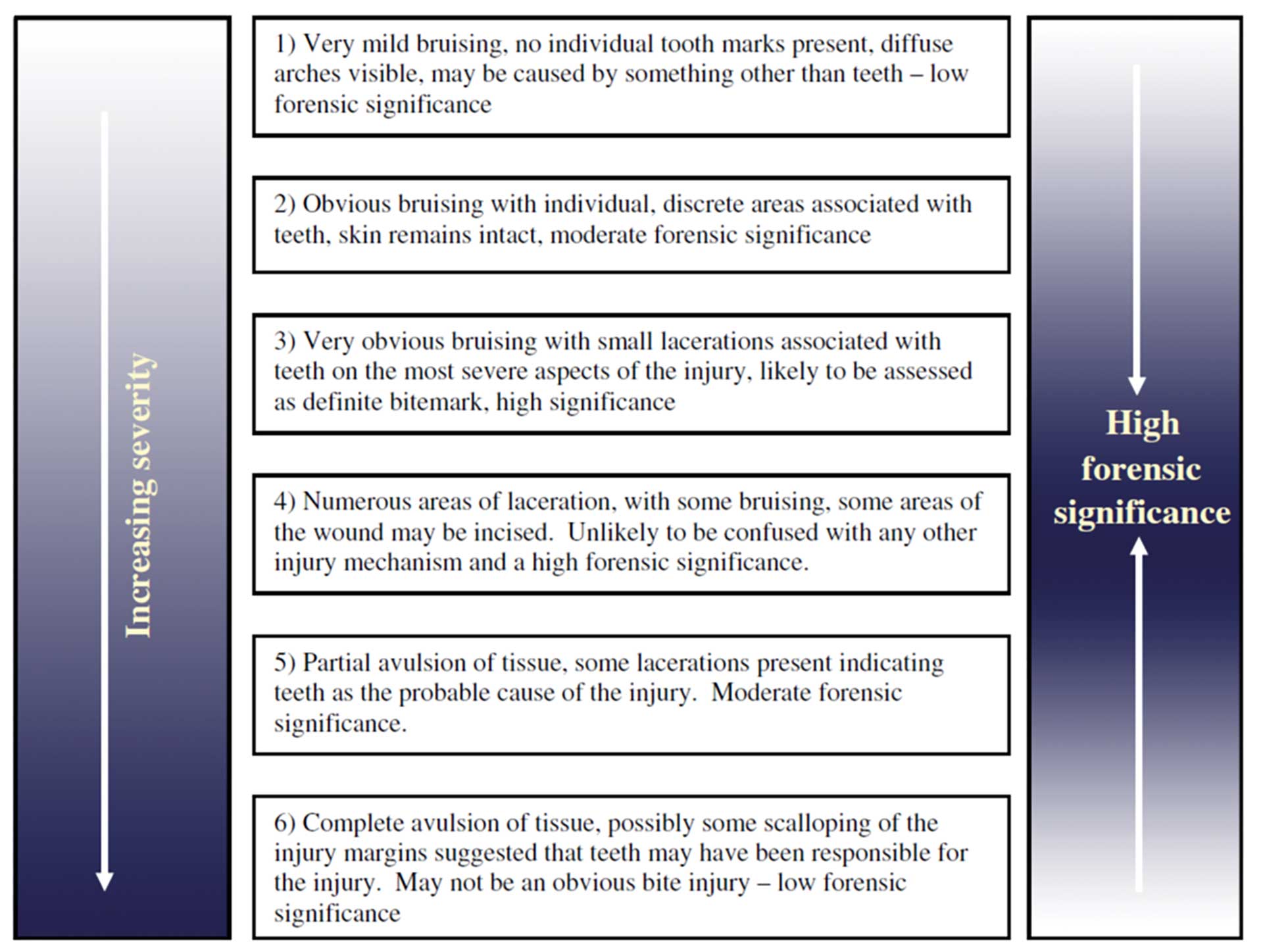
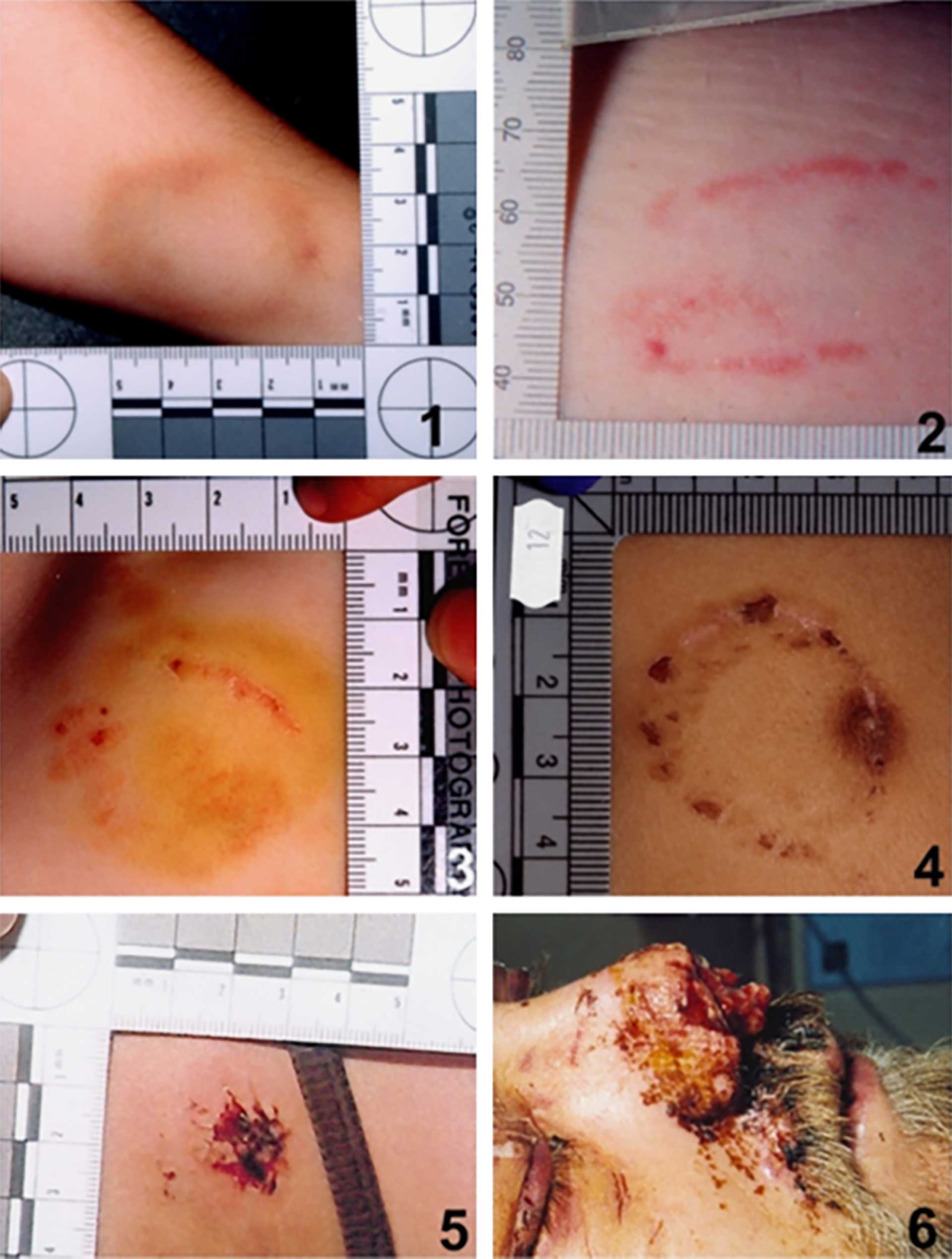
Figure 1. The bitemark severity and significance scale, and the associated visual index by Iain A. Pretty [Pretty, 2007]. The severity and significance scale shows that the association between the level of severity of the bite mark injury and the forensic significance is anything but linear. Copyright © 2007 by American Academy of Forensic Sciences.
Bite marks in inanimate objects
Even though bite marks in criminal investigations commonly are associated with those in human skin of either a victim or an offender, bite marks in inanimate objects such as clothing, food, pencils, pacifiers or personal items can provide valuable forensic evidence, linking individuals to specific incidents, places and individuals [18]. Bite marks in such objects often present as a three-dimensional impression of a person’s dentition, offering a comparison of size and orientation, as well as angulation and shape of the teeth [19]. In comparison to skin, bite marks in food objects may result in very detailed specific and observable characteristics [18] which may contribute to a higher reliability upon analysis [20].
Bite marks on food items and inanimate objects have frequently been described in case reports and legal records [20]. Nevertheless, most studies and guidelines on bite marks have focused on those in human skin [20][21]. With Webster, who suggested a classification in 1982 as one exception, neither a specified classification nor a golden standard procedure for analyses of bite marks in food and inanimate objects specifically has been proposed in modern times [20][22].
Bite mark analysis – the data collection
Defining a bite mark before jumping to analysis is of course the first crucial step. Accordingly, an established bite mark analysis definition reads (citation): «the detection, recognition, description and comparison of bitemarks that occur on living and inanimate objects caused by humans and animals» [8]. This definition is quite broad and leaves place for interpretation, whilst other definitions describe the discipline as analogous to the method of pattern recognition – the science of tool-mark analysis [1]. Based on the section Bite marks in human skin, this method should be dismissed or used with great caution when bite mark traces in skin are evaluated.
For many years, the overlay method was the method of choice in bite mark analysis in skin. Here, a cast of the dentition of interest was covered by a transparent plastic overlay and the incisal edges of the incisors and the cusp tops of the canines manually drawn [23]. Subsequently, the overlay was placed on top of the bite mark and the analysis conducted. The xerographic method, using a copying machine instead of the manual drawing step, was the natural development from the overlay method [23]. Today, 3D technology is widely used, resulting in enhanced data quality due to reduced distortion. Clearance of the manual aspect (subjectivity) in the methodology is essential, though, it must be kept in mind that distortion should still be considered.
The fundamental data collection should, above all, include a DNA swap from the bite mark traces from which a DNA profile can be made [24]. The lesion should be documented by photographs of good quality. The photos should be taken perpendicular to the lesion, the proper angulation, to ensure minimal photographic distortion, optimal lighting conditions should be attempted, and all pictures should be accompanied by a reference scale - a ruler next to the mark [3][21][25] (figure 2). If possible, the photographing should be accompanied by 3D documentation. Finally, the data collection should include a thorough description of the sequence of events, if obtainable. If the case involves a presumed offender, a saliva sample should be collected for DNA profiling and the dentition documented in 3D to be used within a potential analysis. In addition, obtaining a control sample from an unbitten area of the victim’s skin for the analysis is essential [26]. Overall, the guideline from an official consultancy ought to be followed, an established version is available from The American Board of Forensic Odontology’s homepage [21].
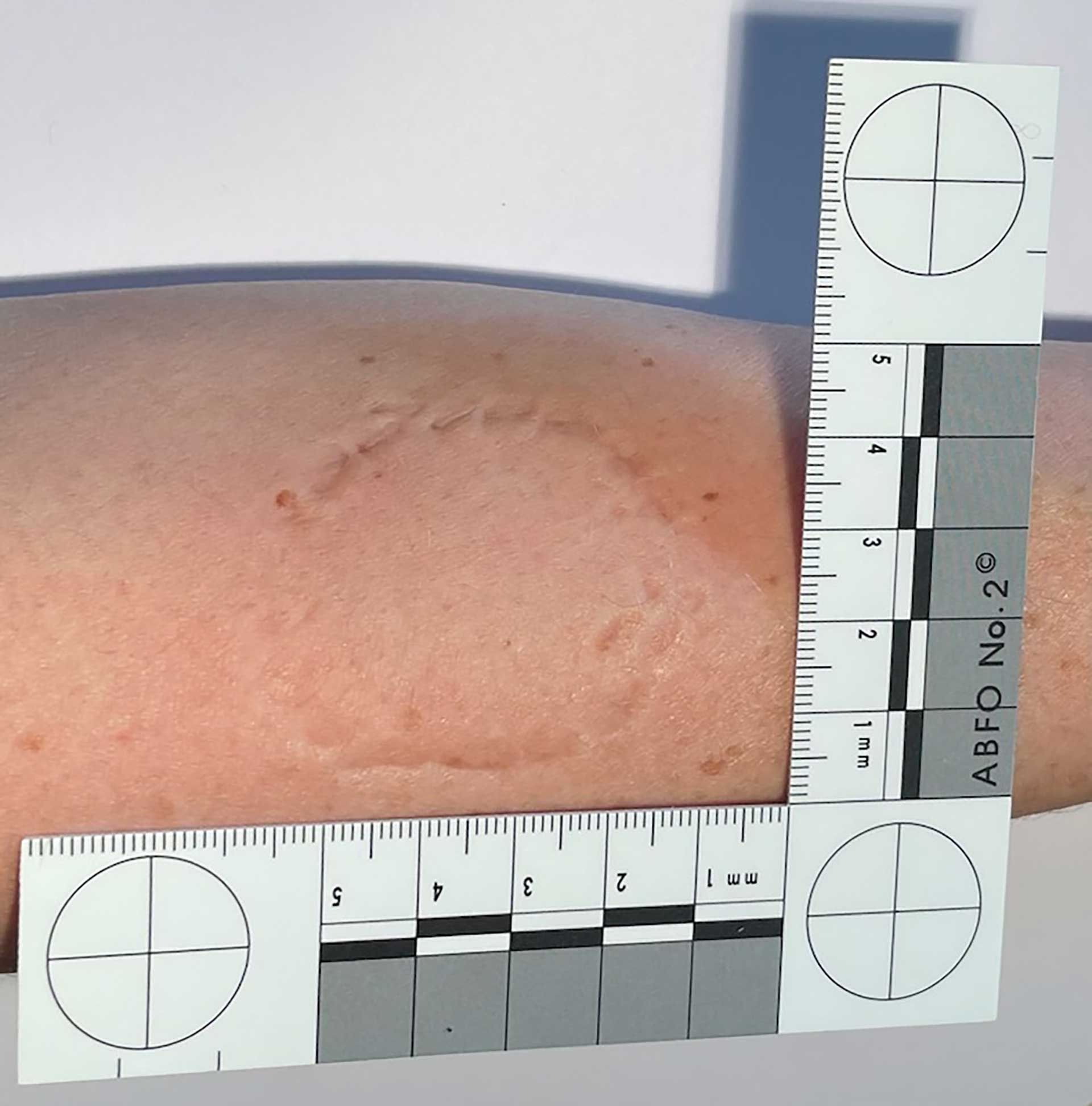
Figure 2. Official scale from The American Board of Forensic Odontology (ABFO) placed next to an experimental bite mark in human skin (right forearm). The photo is taken to the best extent possible perpendicular to the lesion. This ruler is highly recommendable since it ‘tells’ on the angulation of the camera.
From a police perspective, meticulous collection and documentation of bite marks on inanimate objects is, like for skin bite marks, essential for building a robust evidentiary and judicially foundation. Evidence can be collected through various methods, including photography, swabbing, impression taking, and alternative techniques such as tracing on transparent plastic overlays [27][28][29][30].
Since bite marks on perishable items are prone to rapid and significant distortion, their reliability as evidence depends on several factors. These include the composition of the food item, its tendency to dehydrate and change shape at room temperature, the clarity of the impression left by the suspect’s dentition, and the time elapsed before collection and preservation of the evidence. Hence, preservation, such as taking photographs of the object and placing food materials in airtight bags and storing them in a refrigerator, is of great importance [31].
Ultraviolet reflection photography (UVA), infrared and alternate light sources used in forensic practice may also be useful in the documentation of bite marks [21][32]. Just as with bite marks in skin, DNA-swabbing from the affected area on the inanimate object, performed as close to the time of crime as possible, is a key step. Still, in case the episode is only reported hours after the biting incidence, DNA from the offender can possibly still be found [33].
Further collection of data from the suspected bite mark may include 3D-documentation, digitized or by impression compound - techniques which are recommended in analyses of bite marks in food products [34]. Evidence collection from the suspected biter follows the same protocol as described above.
Existing guidelines, such as the manual from The American Board of Forensic Odontology (ABFO), suggest different methods for analysis, although focusing on bite marks in human skin [20][21]. Among traditional techniques for inanimate objects are the «docking»-procedure [35]. Here, a dental cast of a suspect is compared to the dental cast of the bitten object to see if the impression patterns align and match. Bites on flat surfaces, like paper, can be analysed using an overlay technique, like the overlay skin method [23].
Should a general dentist find herself or himself enforced to collect bite mark data, e.g. turned to by a lawyer representing a defendant – not necessarily seeking an objective statement – the dentist is urged to turn to a forensic odontologist or the police for help and instructions to obtain good quality documentation. It is essential that the dentist recognises the complexity of the discipline and the critical impact that evidence quality can have on those involved.
Conclusions
Up to the present, bite mark analysis has seldom been applied by Nordic forensic odontologists. It is a rare event to find a mark unambiguously assessed as a bite mark which also holds sufficient forensic significance, and further, when being subject to an analysis, stands the scrutinization of a critical assessment. This is not tantamount to forensic odontologists rarely commenting on presumed bite marks. Although analysis for some cases should be avoided, a professional assessment of a bite mark’s severity and the possible sequence of events can still be made. A cautious statement about a suspected bite mark, not pointing to a specific offender, could still contribute to the overall understanding of an incident – though less impactful than a definitive statement. Meticulous and timely collection of bite mark traces is essential for obtaining high-quality documentation, which could make all the difference.
Reference list
Bernitz H, Kloppers BA. Bite Mark Collection and Analysis. In: Brkic H, editor. Textbook of Forensic Odonto-Stomatology by IOFOS. 1st ed. Jastrebarsko: Naklada Slap; 2021. p. 263–81.
Pretty IA. The barriers to achieving an evidence base for bitemark analysis. Forensic Sci Int. 2006;159:110–20.
Pretty IA. Forensic dentistry: 2. Bitemarks and bite injuries. Dent Update. 2008;35:48–50, 53–4, 57–8.
Page M, Taylor J, Blenkin M. Expert interpretation of bitemark injuries – a contemporary qualitative study. J Forensic Sci. 2013;58:664–72.
Staun Larsen L. Bidmærkeanalyse. Tandlægebladet. 2023;127:678–85.
Pretty IA, Sweet DJ. The judicial view of bitemarks within the United States Criminal Justice System. J Forensic Odontostomatol. 2006;24:1–11.
Bowers CM. Problem-based analysis of bitemark misidentifications: The role of DNA. Forensic Science International. 2006;159:104–9.
Pretty IA, Sweet D. A paradigm shift in the analysis of bitemarks. Forensic Sci Int. 2010;201:38–44.
Arizona supreme court. State v. Krone, 182 Ariz.319, 897 P.2d 621 (Ariz. Sup. Ct) (June 22, 1995). https://law.justia.com/cases/arizona/supreme-court/1995/cr-92-0480-ap-2.html
Witness to Innocence. Ray Krone. Read 16-05-2025. https://www.witnesstoinnocence.org/single-post/Ray-Krone
Innocence Project. Innocence project. Read 16-05-2025. https://innocenceproject.org/
Kommisjonen for gjenopptakelse av straffesaker. 17.06.2012 Frederik Fasting Torgersen. Read 28-03-2025. https://www.gjenopptakelse.no/pressemeldinger/article/17062021
Jaffe AC. Animal bites. Pediatr Clin North Am. 1983;30:405–13.
Souviron RR. Animal Bites. In: Dorion RBJ, editor. Bitemark Evidence. New York: Marcel Decker; 2005.
Sheasby DR, MacDonald DG. A forensic classification of distortion in human bite marks. Forensic Sci Int. 2001;122:75–8.
Pretty IA. Development and validation of a human bitemark severity and significance scale. J Forensic Sci. 2007;52:687–91.
Arheart KL Pretty IA. Results of the 4th ABFO Bitemark Workshop — 1999. Forensic Sci Int. 2001;124:104–11
Naether S, Buck U, Campana L, Breitbeck R, Thali M. The examination and identification of bite marks in foods using 3D scanning and 3D comparison methods. Int J Legal Med. 2012;126:89–95.
Stavrianos C, Vasiliadis L, Emmanouil J, Papadopoulas C. In vivo evaluation of the accuracy of two methods for the bite mark analysis in foodstuff. Res J Med Sci. 2011;5:25–31.
Rivera‐Mendoza F, Martín‐de‐las‐Heras S, Navarro‐Cáceres P, Fonseca GM. Bite mark analysis in foodstuffs and inanimate objects and the underlying proofs for validity and judicial acceptance. J Forensic Sci. 2018;63:449–59.
American Board of Forensic Odontology (ABFO). Diplomates Reference Manual Section IV Standards & Guidelines, February 2021 Edition, American Board of Forensic Odontology, Inc. 2021. Read 02-04-2025. https://abfo.org/wp-content/uploads/2021/10/ABFO-DRM-Section-4-Standards-Guidelines-Feb-2021.pdf
Webster G. A suggested classification of bite marks in foodstuffs in forensic dental analysis. Forensic Sci Int. 1982;20:45–52.
Maloth S, Ganapathy KS. Comparison between five commonly used two-dimensional methods of human bite mark overlay production from the dental study casts. Indian J Dent Res. 2011;22:493.
Simonsen BT, Montelius K. Personidentifikation ved anvendelse af DNA-analyser. Er eller bliver retsodontologisk identifikation overflødig? Tandlægebladet. 2023;127:690–5.
Fixott R. American Board of Forensic Odontology Standards and Guidelines for Evaluating Bitemarks. J Calif Dent Assoc. 2023;51: 2210329.
Johnson LT, Cadle D. Bite mark evidence. Recognition, preservation, analysis and courtroom presentation. N Y State Dent J. 1989;55:38–41.
Bernitz H, Piper S, Solheim T, Van Niekerk PJ, Swart TJ. Comparison of bite marks left in foodstuffs with models of the suspects’ dentitions as a means of identifying a perpetrator. J Forensic Odontostomatol. 2000;18:27–31.
McKenna CJ, Haron MI, Brown KA, Jones AJ. Bitemarks in chocolate: a case report. J Forensic Odontostomatol. 2000;18:10–4.
Nambiar P, Carson G, Taylor JA, Brown KA. Identification from a bitemark in a wad of chewing gum. J Forensic Odontostomatol. 2001;19:5–8.
Fournier G, Savall F, Galibourg A, Gély L, Telmon N, Maret D. Three-dimensional analysis of bitemarks: A validation study using an intraoral scanner. Forensic Sci Int. 2020;309:110198.
David TJ, Haugseth RM, Hauptle MB. A comparative study of the methods of preservation of bitemarks in foodstuffs. Proceedings of the Annual Meeting on American Academy of Forensic Sciences, Odontology Section; 2001 Feb 22; Seattle, WA.
Garcia JE, Wilksch PA, Spring G, Philp P, Dyer A. Characterization of digital cameras for reflected ultraviolet photography; Implications for qualitative and quantitative image analysis during forensic examination. J Forensic Sci. 2014;59:117–22.
Ishikawa N, Nakamura Y, Miura Y, Kuroda H, Kitamura K, Hashimoto M. Influence of the amount of saliva deposition and time elapsed after deposition on bite mark analysis. Forensic Sci Med Pathol. 2024;20:886–95.
Di Palma A, Bianchi I, Focardi M, Cioffi C, Bonetti SS, Dalessandri D. Bitemark analysis comparing the use of digital scans and 3D resin casts. J Forensic Odontostomatol. 2024;42:76–86.
Daniel MJ, Pazhani A. Accuracy of bite mark analysis from food substances: A comparative study. J Forensic Dent Sci. 2015;7:222–6.
Corresponding author: Line Staun Larsen. E-mail: line.staun@dent.au.dk
Accepted for publication 21.5.2025. The article is peer reviewed.
The article is cited as: Staun Larsen L, Richter S, Kvaal SI, Sundwall AJ. Bite mark traces. Nor Tannlegeforen Tid. 2026;. doi:10.56373/6970adfd726b8
Keywords: bites, human, forensic dentistry, evidence gaps
Akseptert for publisering 21.05.2025. Artikkelen er fagfellevurdert.
Artikkelen siteres som:
Larsen LS.Richter S.Kvaal SI.Sundwall. AJ. Bite mark traces. Nor Tannlegeforen Tid. doi:10.56373/6970adfd726b8